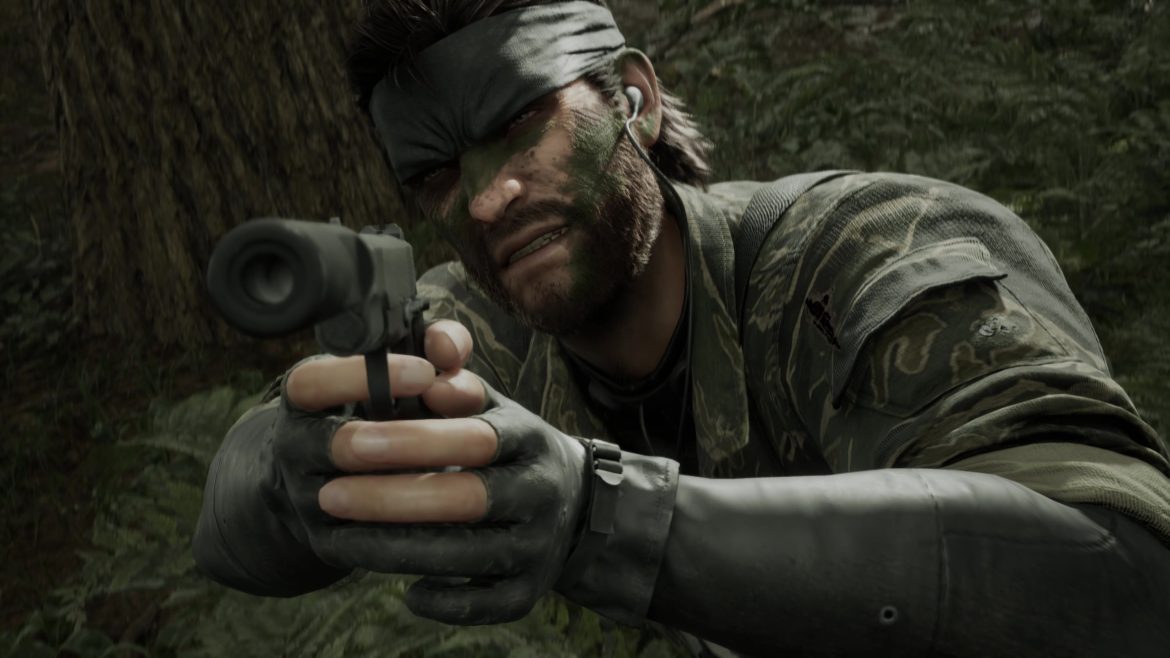
What can I really tell you about Metal Gear Solid Delta: Snake Eater? Pull off the cardboard box, and this is pretty plainly still Metal Gear Solid 3: Snake Eater. First released on PS2 back in 2004 it’s rightly been celebrated as one of the best games ever made, with reams written about how phenomenal it is. I don’t just like Metal Gear Solid 3. Hell, I love it. And I’m sitting here just itching to play it again. I always am, and I always do. Yet, I’m not sure Metal Gear Solid Delta does much to make that replay all that different from the times before.
Metal Gear Solid Delta is a glossy Unreal Engine remake, and an extremely faithful one. Following Naked Snake on a doomed mission to Russia in the 1960s, he must stealthily try to extradite a defecting scientist, sabotage a nuclear missile platform, and assassinate a traitor, with barely any equipment to his name – scrounging tools and snacking on wildlife to stay alive. In series tradition, it’s a narrative that blends serious stakes and historical facts with military sci-fi fantasy that goes in the complete opposite direction. Barely an hour after watching a slideshow on the Cold War, Naked Snake is jumped by a man who shoots hornets from his mouth called The Pain. It’s brilliant.
Shedding skin
Fast Facts
Release date: August 28, 2025
Platform: PC, PS5, Xbox Series X/S
Developer: In-house, Virtuous
Publisher: Konami
Metal Gear Solid Delta keeps this story intact right the way down to re-using all the same voice acting and cutscene direction. Care has definitely been taken in polishing everything up – the audio is crisp. New character models and environmental features have been refreshed to be impressively detailed to a degree we couldn’t even fathom in the ’00s. All this extra foliage flourish really makes the Russian forests lush (and sometimes very muddy), which is where the bulk of the action takes place.
Though Metal Gear Solid Delta’s forests look more alive than ever, they’re still beholden to the same structure as the original – it’s so faithful that level geometry remains the exact same. The forest frequently funnels you down set corridors, and the exterior of enemy base Groznyj Grad, for instance, is still awkwardly split into four screens with a brief load between each. MGS3 is more about progressing through discrete screens than the more longform infiltration of Metal Gear Solid 5, and that remains the case here.
I struggle to begrudge the game much for it, though. Metal Gear Solid Delta is firmly an exact recreation of Metal Gear Solid 3. But it does mean its higher fidelity graphical style can clash with the clearly older bones beneath. Snake can still perform a rigid-feeling kick combo in the rough vicinity of a snake to instantly kill it, causing it to fade away as it turns into a floating food pack. Enemy guards can still end up in-sync so their idle animations uneasily occur simultaneously as they stand next to each other. Press the roll button to vault over a big crate, and Snake will weirdly float across to nail his landing, defying physics. The same is true in cutscenes, the original motions sometimes appearing a bit uncanny performed by the extremely detailed models.
It’s the kind of clashing that can make it hard to appreciate Metal Gear Solid Delta’s enhanced visuals, as the rigid faithfulness to MGS3’s foundations mean it’s clear you’re still fundamentally playing a much older game.
In fact, it can make some of the more dated sections of Metal Gear Solid 3 stand out all the more, from overly-long shooting gallery sequences towards the end throughout which you have little control, to how basic enemy AI can feel as they patrol their routes. (And yes, all the pervy chances to ogle lady bits in first-person are still here). Rarely does increased fidelity feel additive to the way Metal Gear Solid Delta actually plays.